

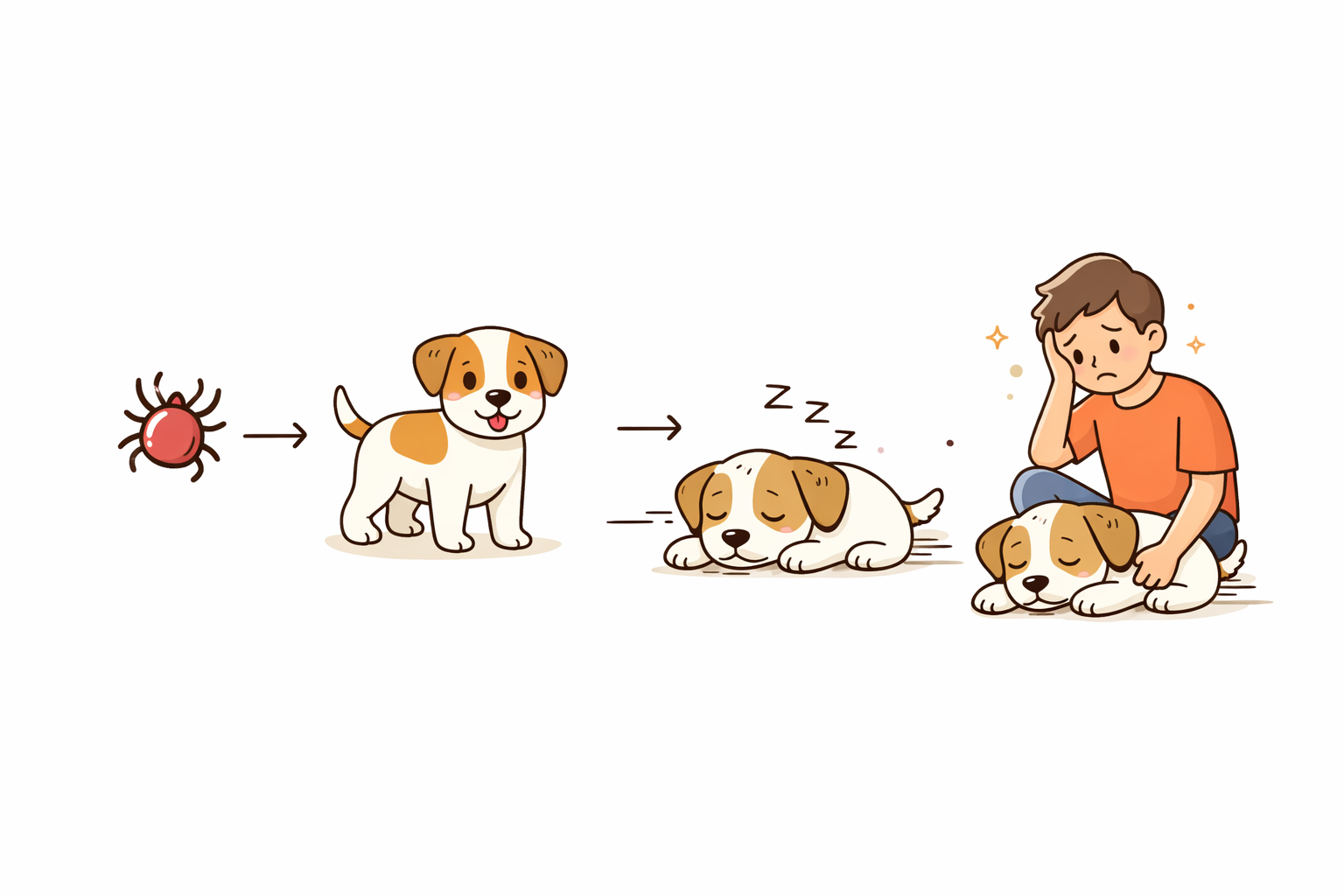
An Open Letter Pet Parents,
Can tick fever be cured in dogs? constantly haunted by this thought? I understand how frightening it feels to realise that a disease capable of taking your dog’s life can begin with something as small as a tick bite. Sadly, nearly eighty percent of pet parents do not recognise the seriousness of tick fever until it has already caused significant damage. Lack of awareness, delayed diagnosis, and incomplete understanding continue to cost countless innocent lives.
From my own experience, and from the many pet parents who have reached out to me over the past two years asking the same question, can tick fever be cured in dogs?, I have seen one painful pattern repeat itself, their confusion, fear and not know whom to believe due to severe lack of clear guidance. Many dogs who were otherwise healthy are lost simply because their illness was not understood in time.
When tick fever in dogs progresses without proper medication, monitoring, and awareness, it does not only weaken the dog. It breaks the pet parent from within. This article exists to give you complete guidance, clear understanding, and honest answers about tick fever in dogs. Most importantly, it will help you understand the key factors that decide whether your dog can fully recover, survive with complications, or face long term consequences.

Early Signs of Tick Fever in Dogs That Owners Miss
As pet parents, it is not an easy responsibility to ensure that our dogs are healthy at all times. There are moments when certain signs are overlooked, and those missed signs later become the reason for a critical illness. In my case, I initially missed some significant changes my pet was showing, assuming it was just regular bloating or indigestion, something senior dogs often experience with age. The earliest signs of tick fever in dogs are usually quiet, easy to dismiss, and often mistaken for tiredness, mood changes, or minor digestive issues. Many cases that later struggle with tick fever recovery in dogs begin with these early signs of tick fever in dogs that owners miss.
When a pet parent questions, can tick fever be cured in dogs? One of the most important signs a pet parent needs to observe is lethargy. When a dog is young or hyperactive, lethargy is usually obvious. However, with senior dogs, it becomes difficult to judge whether they are simply tired or if something more serious, such as tick fever in dogs, is developing. Veterinary literature, including Infectious Diseases of the Dog and Cat, describes this lethargy as an early immune response to blood parasites such as ehrlichiosis and babesiosis. At this stage, blood parameters may already be shifting even when outward symptoms appear mild.
Another critical sign I could not detect early enough was loss of appetite. Appetite changes can occur for many reasons, which makes them easy to overlook. For example, with male dogs, reduced interest in food may be more noticeable, while female dogs, especially senior ones, may simply eat smaller quantities or lose interest in certain foods gradually. The Merck Veterinary Manual explains that appetite changes often coincide with early platelet decline and low grade fever, both of which commonly appear before tick fever is formally diagnosed. This becomes especially relevant later, because low platelet count tick fever dogs recovery is closely linked to how early these changes are identified.

Dry Skin & Itch Relief Pet Shampoo for Dogs
Pale gums are another sign that can appear normal unless observed closely. Gum color changes are a strong indicator that platelet levels or hemoglobin may be dropping. The Journal of Veterinary Internal Medicine notes that pale gums reflect anemia and platelet loss caused by blood parasites. When this sign progresses unnoticed, the risk of complications increases, along with the likelihood of relapse of tick fever in dogs after treatment.
Other signs include mild fever, which is rarely detectable without checking, and behavioral withdrawal, such as reduced interest in play, slow responses, or sleeping for most of the day. Many dogs with tick fever run a low grade fever for several days before appearing seriously unwell, which is why veterinarians often recommend using a digital pet thermometer at home. This supports early intervention and smoother tick fever recovery in dogs during treatment. Veterinary Pathology research also links behavioral withdrawal to immune system stress rather than pain alone, particularly in early and chronic stages.
When these signs are missed, symptoms may slowly become chronic, leading to recurring lethargy, appetite issues, weakened immunity, and prolonged recovery. This is why questions such as is tick fever curable in dogs? can tick fever be cured in dogs?, can a dog survive tick fever?, how serious is tick fever in dogs?, and can dogs fully recover from? came along. Recovering from tick fever is closely assed with early recognition, appropriate tick fever treatment for dogs, and consistent monitoring. Tick fever survival rate in dogs improves significantly when these subtle signs are identified before the disease progresses.

Tick removal tool
How Vets Diagnose Tick Fever in Dogs?
For a pet parent seeking reassurance, the most critical step is an accurate and timely diagnosis. If you find a tick on your dog or suspect that your dog may have come in contact with ticks, the first and most important step is to contact your veterinarian and clearly explain the situation. One of the initial actions a vet usually takes is prescribing baseline investigations such as a CBC, LFT, and KFT to assess how your pup’s vital parameters are functioning.
These basic tests help determine whether further investigation is required, whether there are early signs of tick fever in dogs that owners miss, or whether a tick borne disease may already be developing in your dog’s system. In this case, the following tests were carried out around fifteen days after a tick bite in an otherwise healthy young dog.

In this report, the dog appears clinically healthy and most parameters fall within normal limits, but the Total Leukocyte Count (TC), with an ideal range of 8,000 to 18,000 cu.mm, is slightly elevated beyond the reference value. At the same time, the platelet count shows a borderline decline, which can strongly indicate the presence of an underlying infection.
An elevated TC count usually reflects that the immune system is actively responding to a trigger such as a mild infection, inflammation, recent vaccination, stress, or early exposure to a virus or parasite. In young dogs, these changes can appear well before visible symptoms emerge, which is why vets evaluate TC levels alongside differential counts and clinical signs rather than in isolation.
When detected early, this immune response serves as an important warning signal, prompting closer monitoring and repeat testing to rule out developing tick borne infections or transient viral challenges. This step is central to how vets diagnose tick fever in dogs.
Also read article on How To Help Your Dog Lose Weight Without Exercise?- 7 Best Home Diets
If such changes are observed in the initial report, the next step a veterinarian may recommend is a comprehensive panel that includes PCR testing for tick borne diseases along with SNAP testing, SDMA, and full serum chemistry. The foundation of diagnosis continues to be the complete blood count combined with a blood smear.
One of the most consistent findings in tick fever is a low platelet count, medically referred to as thrombocytopenia. Veterinary literature repeatedly identifies this as a hallmark of acute ehrlichiosis and a major factor influencing low platelet count tick fever dogs recovery.

Anemia and abnormal white blood cell counts may also be present, and in some cases, parasites can be visualized directly on a manual blood smear. These changes help explain why dogs that appear only mildly unwell can suddenly deteriorate, especially when tick fever becomes life threatening.
Serology or antibody based SNAP tests are commonly used alongside blood work to detect exposure to organisms such as Ehrlichia canis, Anaplasma, or Borrelia. A positive result indicates exposure rather than disease severity, which is why results must be interpreted alongside CBC findings and clinical presentation.
Veterinary journals caution that early signs of tick fever in dogs that owners miss may occur before antibodies are detectable, complicating early diagnosis. SDMA testing is often added to assess kidney function, as tick borne disease progression can sometimes affect renal health even when treatment has already begun. These findings become relevant when evaluating signs dog is not recovering from tick fever or monitoring immune system weakness after tick fever.

This report represents a Canine Hemoprotozoa PCR panel, which detects the DNA of multiple tick borne organisms rather than antibodies, allowing confirmation of an active infection. In this case, Ehrlichia canis was detected with a CT value of 31.1, while Babesia, Anaplasma, Hepatozoon, and Trypanosoma were not detected.
The CT value reflects the quantity of parasite DNA present; a higher value such as 31.1 generally indicates a lower parasite load and suggests that the infection is still in an early phase. Lower CT values, particularly those approaching or dropping below 20, are often associated with heavier parasite burden, chronic infection, and higher risk of relapse of tick fever in dogs. This distinction is crucial when explaining tick fever blood test results explained for dogs and understanding why early intervention improves outcomes.
For more definitive answers, veterinarians may recommend PCR testing, which identifies the DNA of the parasite itself. This becomes particularly valuable in chronic or relapsing cases, where antibody levels fluctuate and relapse of tick fever in dogs becomes a concern. Research published in the Journal of Veterinary Internal Medicine explains that chronic infections can remain hidden in the bone marrow or spleen, contributing to delayed diagnosis and prolonged recovery.
Understanding blood values also helps pet parents follow recovery. Platelet counts rising steadily are strongly associated with tick fever recovery in dogs, while persistently low values signal ongoing immune or bone marrow involvement, as outlined in the Merck Veterinary Manual.
The 6 Critical Factors That Directly Impact Recovery
When pet parents ask can tick fever in dogs be cured? One thing is very important to understand that there is no one factor that creates difficulty in Tick fever recovery in dogs. Outcomes depend on a combination of timing, biology, and follow through, which explains why pet parents often ask whether dogs can fully recover from tick fever even after receiving treatment. These six factors repeatedly appear across veterinary literature and clinical case discussions.
Factor 1: Late diagnosis
Late diagnosis is one of the major setbacks and plays a decisive role on the road of recovery. Early signs of tick fever in dogs that owners miss, such as mild lethargy, reduced appetite, or subtle behavioral withdrawal, allow blood parasites to multiply quietly.
Journals explain that by the time platelet count in tick fever begins to fall noticeably, immune damage may already be underway. Delayed testing increases the risk of complications and directly affects low platelet count tick fever dogs recovery, making treatment longer and less predictable.
Factor 2: The type of tick disease
Another important factor here is not just focusing on the symptoms, but also knowing the type of tick borne disease your dog system is carrying. Ehrlichiosis in dogs, babesiosis, and anaplasmosis behave differently inside the body. Scott Weese describes how some Babesia infections cause direct red blood cell destruction, while Ehrlichia targets immune cells and bone marrow. This variation explains why tick fever survival rate dogs differ even when treatment protocols appear similar.

Factor 3: Immune suppression
Nonetheless, the immune system suppression causes the biggest issue and significantly affects a dog’s immune system while recovering from such a heavy disease. Blood parasites in dogs weaken immune response over time, especially when infection enters a chronic phase.
Nathalie Boulanger and Stephen Wikel link prolonged immune system weakness after tick fever with recurring infections, delayed platelet recovery, and difficulty clearing the organism completely. This immune strain explains why tick fever becomes life threatening in some dogs despite appropriate medication.

Factor 4: Incomplete Treatment
Accessing inefficient or incomplete treatment is the most dangerous, another critical factor. Not having a strong infrastructure in veterinary service is actually pushing the pet towards far more serious conditions. In conversation with one pet parent, I came to know that even though the Vet had prescribed and strongly suggested starting the antibiotic, the pet parents decided it was not necessary as ‘someone’ told her that i would cause kidney failure
.JC McClure (2010) highlighted the early discontinuation of doxycycline treatment for dogs or missed doses with relapse of tick fever in dogs. Even when clinical signs improve, parasites may persist at low levels in bone marrow or spleen. Incomplete treatment increases the risk of chronic tick fever in dogs symptoms appearing weeks or months later.
Also read another article on Here is how to deal with the loss of a pet: 7 practical ways to cope
Factor 5: Poor nutrition
Even though the above factor works simultaneously, poor nutrition could destroy the foundation of a dog’s immune system during recovery and slow healing significantly. BJ Carr (2024), emphasizes that platelet regeneration and immune repair require adequate protein, micronutrients, and caloric intake. Dogs that stop eating or lose weight during treatment often show slower tick fever recovery in dogs and more pronounced long term effects of tick fever in dogs.
This is why many vets suggest nutritional and immune support during recovery. But building an immune system from a very early stage would help in the long run that include complete nutritious meals everyday. Products such as dog immune support supplements or appetite support formulas, homemade meal services, are often recommended as supportive care alongside medication.
Factor 6: reinfection or relapse
Finally, reinfection or relapse of tick fever in dogs remains a persistent challenge. Tick fever can come back in dogs either due to fresh tick exposure or reactivation of dormant infection. Piccione, (2016) show that reinfection risk is highest when tick prevention lapses or immune recovery is incomplete. This explains why signs of a dog not recovering from tick fever often appear after initial improvement and why ongoing tick fever prevention for dogs is part of long term management.
Taken together, these factors explain why questions like can a dog survive tick fever?, how serious is tick fever in dogs?, and is tick fever painful for dogs? rarely have simple answers. Tick fever treatment for dogs works best when diagnosis is early, treatment is completed fully, nutrition is supported, and reinfection is actively prevented.
Can a Dog Survive Tick Fever? Chronic Symptoms, Relapse, and Treatment Explained
Whether can tick fever be cured in dogs depends not only on treatment, but on how the disease behaves over time and how recovery is managed after the initial phase. This is where many pet parents feel confused, especially when dogs seem better and then decline again.
Symptoms of chronic tick fever in dogs tend to appear gradually rather than all at once. Weight loss is often one of the earliest long term effects of tick fever in dogs, driven by prolonged immune activation and reduced nutrient absorption. Recurring fever may come and go, which is why it is frequently missed unless temperature is monitored regularly at home.
Weak immunity becomes visible through repeated infections, slow wound healing, or persistent lethargy, all signs of immune system weakness after tick fever. Behavioral changes are subtle but consistent, reduced playfulness, withdrawal, and low stamina often indicate that recovery is incomplete.
This leads to the question many owners ask, can tick fever come back in dogs after treatment. Piccoine, (2016)explains two main reasons such as reinfection happens when tick prevention lapses and a new tick bite introduces fresh blood parasites in dogs.
Relapse of tick fever in dogs occurs when the original infection was suppressed but not fully cleared, often due to immune compromise or incomplete treatment. This is why tick fever recovery in dogs requires ongoing monitoring even after symptoms improve and why prevention matters long after antibiotics stop.
When it comes to tick fever treatment for dogs, antibiotics remain the foundation. Doxycycline treatment for tick fever in dogs is commonly used for ehrlichiosis and anaplasmosis, while babesiosis may require additional antiparasitic drugs. It is very important to complete a 30 day antibiotic course, stopping mid way could result in worsening health.
| Tick Fever Type | Common Causative Organisms | Primary Medicines Used | Typical Treatment Duration | Key Notes for Pet Parents |
| Bacterial Tick-Borne Diseases | Ehrlichia, Anaplasma, Rickettsia(RMSF) | Doxycycline (gold standard), Minocycline, Tetracycline | 3–4 weeks, longer in chronic cases | Doxycycline treatment for tick fever in dogs is often started even before confirmation due to high risk. Early initiation improves recovery and platelet response. |
| Co-infections or Special Cases | Mixed bacterial infections | Enrofloxacin, Azithromycin (adjunct or alternative) | Depends on response and co-infection | Used when doxycycline response is inadequate or when multiple pathogens are suspected. |
| Protozoal Tick-Borne Disease | Babesiaspecies | Imidocarb dipropionate(injectable antiprotozoal) | Usually 1–2 injections, sometimes repeated | Babesia infection in dogs requires different treatment than bacterial tick fever. Antibiotics alone are not effective. |
| Hepatozoonosis | Hepatozoon canis | Trimethoprim–Sulfa + Clindamycin (combination therapy) | Long term, often several weeks | Requires strict adherence and monitoring. Relapse can occur if treatment is incomplete. |
| Severe or Advanced Tick Fever | Any tick-borne pathogen | Antibiotics plus supportive medicines | Varies by severity | Supportive care becomes critical when anemia, bleeding, or organ stress is present. |
Supportive medicines are often prescribed to protect the liver and kidneys, manage inflammation, and stabilize platelet count in tick fever. Platelet recovery is monitored closely through repeat blood tests, as low platelet count tick fever dogs recovery strongly influences outcome.
| Supportive Need | Why It Is Required | Examples of Support |
| Severe Anemia | Red blood cell destruction by parasites | Papaya Carica juice infused blood tonic or Blood transfusion in (severe cases only) |
| Low Platelet Count | Risk of internal or external bleeding | Close CBC monitoring, rest, nutritional support like raw papaya leaf juice ( with moderate portion), moringa, beetroot. |
| Dehydration or Weakness | Reduced intake, fever, illness stress | Herb infused bone broth ( if the dog is still eating) or IV fluids ( in severe cases) |
| Organ Protection | Liver or kidney stress during infection | Liver guard ( mandatory), Hepatic and renal support medicines |
Home care during tick fever recovery plays a significant role. Diet for dogs recovering from tick fever should focus on easily digestible protein and immune support, which is why many vets recommend nutritional supplements and appetite support products.
Tick fever treatment duration in dogs typically ranges from three to six weeks, depending on response and severity, and cost of tick fever treatment in dogs varies with testing frequency and supportive care needs.Taken together, these factors explain why can a dog survive tick fever, how serious is tick fever in dogs, and can dogs fully recover from tick feverdepend on early detection, complete treatment, nutrition, and strict tick fever prevention for dogs.
Can Tick Fever Be Cured in Dogs?
If you ask me today, with everything I know now, that can a dog survive tick fever? Honestly, yes, tick fever can be cured in dogs. I have seen dogs recover fully, and I have also seen what happens when diagnosis comes too late. The cure is never guaranteed, not because treatment is unavailable, but because tick fever progresses quietly and does not pause while we try to recognize it. It works silently, inside the blood, inside the immune system, long before the dog looks “seriously sick.”
I learned this the hardest way possible, when I lost my ten year old dog to tick fever. At that time, I thought the veterinarian was not attentive enough, not urgent enough, maybe too busy as that is the easy place to put the blame when you are grieving. But later, when I started reading actual veterinary books and journals, when I understood how tick borne diseases behave, I realised something that hurt even more.
I lacked in proper knowledge as a pet parent and that resulted in loosing my soul dog. By the time her platelet count dropped and organ failure had already begun, medicine could only do so much, tick fever had already moved from a treatable stage to a life threatening one. Understanding the dearth of this disease and take immediate action is one of the major role player in your pet’s successful recovery.
What Veterinary Science says about Tick Fever Recovery in Dogs?
When dealing with tick fever on a personal level, one thing became very clear to me, the answer to the question can tick fever be cured in dogs? is that it is possible, but only when we catch it before it quietly destroys the body from inside. Tick fever is not dramatic in the beginning, it works slowly through the blood, through parasites like ehrlichiosis, babesiosis, and anaplasmosis, long before the dog looks seriously ill.
Veterinary science explains exactly why outcomes differ so much during different phases of tick fever recovery in dogs. In Infectious Diseases of the Dog and Cat, Dr. Craig Greene explains that tick borne infections often respond very well to treatment when diagnosed in the acute phase. But once bone marrow suppression and immune damage begin, recovery becomes slower, incomplete, or sometimes impossible, especially in older dogs. My ten year old dog was diagnosed late, when her platelet count had already dropped and organ stress had started. That is when tick fever becomes life threatening, not because treatment does not exist, but because time has already been lost.
The Journal of Veterinary Internal Medicine repeatedly shows that dogs diagnosed early often show platelet recovery within weeks of starting doxycycline treatment. But it also explains why relapse of tick fever in dogs happens. Delayed diagnosis and immune damage increase the risk of chronic tick fever, where dogs seem to recover, then fall sick again months later. This helped me understand why tick fever survival rate in dogs varies so widely but timing matters.
One of the biggest mistakes I made was not understanding blood test results. The Merck Veterinary Manual makes it clear that low platelet count in tick fever is not just a lab abnormality. It is a warning sign that the disease is affecting blood clotting and bone marrow function when platelet count drops too far, tick fever becomes life threatening very quickly.
Age and immune strength matter more than most people realise as Veterinary Pathology research shows that chronic ehrlichiosis can cause long term immune suppression. Looking back, this explains why my older dog could not fight the infection the way my younger dog could.
So when people ask me can tick fever be cured in dogs or not? my answer as per my lived experience; is yes, many do. Tick fever is serious not because it is untreatable, but because it is often underestimated until blood tests reveal how much damage has already been done.
At the end of this article
I would like to convey that, when I see every concerned pet parent searching with one question; can tick fever be cured in dogs? I can feel the overwhelming experience, especially because its early signs are often subtle and easy to miss. What veterinary science and lived experience both show is that early action makes a meaningful difference. Timely diagnosis, appropriate treatment, nutritional support, and prevention together shape recovery. While not every case follows the same path, many dogs do improve and return to a good quality of life when care begins early and continues consistently. Hope with tick fever is realistic when it is paired with awareness, follow up testing, and patience, not assumptions or delays. Staying observant and proactive remains the most reliable form of protection a pet parent can offer.
FAQs
Can a dog survive tick fever?
Yes, many dogs can survive tick fever, especially when it is diagnosed early and treated correctly. Survival depends on factors such as the type of tick borne infection, how quickly treatment starts, and the dog’s immune strength. Tick fever survival rate in dogs improves significantly with early testing, proper antibiotics, and supportive care, particularly before platelet count drops severely.
Is tick fever painful for dogs?
Tick fever itself may not always cause obvious pain in the early stages, but it can become painful as the disease progresses. Fever, joint inflammation, anemia, and weakness can cause significant discomfort. In advanced cases, bleeding or organ stress may occur, which is why understanding how serious tick fever in dogs can be is important for timely intervention.
Can tick fever be treated at home?
No, Tick fever cannot be treated at home without veterinary guidance. Antibiotics, blood tests, and monitoring are essential parts of tick fever treatment for dogs. Home care plays a supportive role during recovery, such as rest, hydration, and nutrition, but medical treatment and follow up testing must always be guided by a veterinarian.
How long does tick fever take to cure?
Tick fever treatment duration in dogs typically ranges from three to six weeks, depending on the infection type and severity. Some dogs recover faster, while others need longer monitoring, especially if platelet count recovery is slow. Tick fever recovery in dogs may continue even after antibiotics stop, which is why follow up blood tests are important.
Can puppies recover from tick fever?
Yes, puppies can recover from tick fever, and many respond well to treatment when diagnosed early. Their recovery often depends on prompt diagnosis, appropriate dosing, and nutritional support. Because puppies have developing immune systems, close monitoring is important, but with early care, many puppies can fully recover from tick fever.